Key resources

Find the latest OECD reports, discover key initiatives and explore datasets for the latest insights to help countries integrate climate action into broader strategies for economic transformation.

Discover Key OECD initiatives

Drawing on its expertise in economic policymaking, climate mitigation and adaptation, resilience, and financing, the OECD helps countries integrate climate considerations into broader strategies for economic transformation.

Inclusive Forum on Carbon Mitigation Approaches

Mitigation

Inclusive Forum on Carbon Mitigation Approaches

The Inclusive Forum on Carbon Mitigation Approaches (IFCMA) is an initiative designed to help improve the global impact of emissions reduction efforts around the world through better data and information sharing, evidence-based mutual learning and inclusive multilateral dialogue. It brings together all relevant policy perspectives from a diverse range of countries from around the world, participating on an equal footing basis, to take stock of and consider the effectiveness of different carbon mitigation approaches.
Read more
Climate Change Expert Group (CCXG)

Adaptation and resilience

Climate Change Expert Group (CCXG)

The Climate Change Expert Group (CCXG) is a group of government delegates and experts from developed and developing countries. The aim of the group is to promote dialogue on and enhance understanding of politically important technical issues in the international climate change negotiations and for the implementation of the Paris Agreement.
Read more
The OECD project on Climate, Economic and Social Resilience

Mitigation

The OECD project on Climate, Economic and Social Resilience

The OECD project on Climate, Economic and Social Resilience harnesses the multidisciplinary reach of the OECD to support governments in driving the swift transformational change needed to tackle climate change.

Read more 
International Programme for Action on Climate

Monitoring and measuring 

International Programme for Action on Climate

The OECD International Programme for Action on Climate (IPAC) supports country progress towards net-zero greenhouse gas (GHG) emissions and a more resilient economy by 2050. Through regular monitoring, policy evaluation and feedback on results and best practices, IPAC helps countries strengthen and co-ordinate their climate action. It complements and supports the UNFCCC and the Paris Agreement monitoring frameworks.
Read more

Discover OECD publications

The following OECD publications present the latest OECD research and analysis on climate and environmental issues.

Investing in Climate for Growth and Development: The Case for Enhanced NDCs

Mitigation

Investing in Climate for Growth and Development: The Case for Enhanced NDCs

With the 2025 update of Nationally Determined Contributions (NDCs), this OECD-UNDP report shows how aligning climate action with broader national priorities can deliver widespread benefits - from poverty reduction and better health to increased energy access and green investment opportunities.
Read more
Global Drought Outlook: Trends, Impacts and Policies to Adapt to a Drier World

Adaptation and resilience

Global Drought Outlook: Trends, Impacts and Policies to Adapt to a Drier World

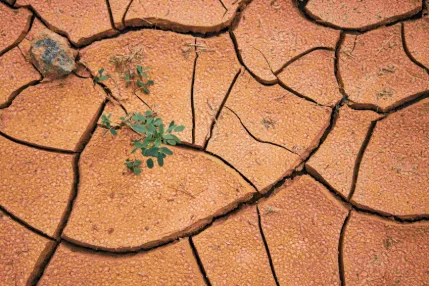
Droughts are becoming more frequent, prolonged and severe with climate change, threatening water security and placing growing pressure on people, ecosystems and economies. This report provides new insights into the rising human, environmental, and economic impacts of droughts and offers practical policy solutions to minimise losses, build long-term resilience, and support adaptation to a drier future.
Read more
OECD Review on Aligning Finance with Climate Goals 2026

Finance and investment

OECD Review on Aligning Finance with Climate Goals 2026 

This report supports policymakers and investors by tracking the evolving mix of climate-related financial sector policies, the degree of climate alignment of financial flows and the landscape of climate metrics used in the financial sector.

Read more
Climate Finance Provided and Mobilised by Developed Countries in 2013‑2024

Finance and investment

Climate Finance Provided and Mobilised by Developed Countries in 2013‑2024 

This report tracks progress towards the USD 100 billion annual climate finance goal established under the United Nations Framework Convention on Climate Change (UNFCCC), initially set for 2020 and extended to 2025. It presents aggregate trends in climate finance provided and mobilised by developed countries for climate action in developing countries, adding figures for 2023 and 2024 to the previously published series.
Read more
Unpacking the Belém decision on the Global Goal on Adaptation (GGA)

Mitigation

Unpacking the Belém decision on the Global Goal on Adaptation (GGA) 

This paper unpacks the Belém decision on the GGA. It first analyses opportunities and challenges for early engagement with the UAE FGCR targets and testing of the Belém Adaptation Indicators, notably through the preparation of second biennial transparency reports (BTRs), identifying where pragmatic entry points exist and where data, capacity or methodological constraints may limit initial uptake. It then turns to the Belém-Addis vision, outlining key considerations regarding its scope, purpose and modalities for the process to deliver actionable guidance by COP32.
Read more
Preparing the ground for the second global stocktake (GST) of the Paris Agreement

Mitigation

Preparing the ground for the second global stocktake (GST) of the Paris Agreement 

This paper assesses the uptake of GST1 outcomes in national and international processes and presents lessons for GST2. It also explores how key shifts in the operating context could affect the design, conduct and impact of GST2. Finally, the paper identifies key considerations in preparing for GST2 in an age of implementation.
Read more

Discover OECD data

OECD data and indicators provide essential information to inform effective climate policies. Explore our dashboards and databases.

Environment at a Glance

Measuring and monitoring

Environment at a Glance

The Environment at a Glance Indicators provide real-time interactive on-line access to the latest comparable OECD-country data on the environment from the OECD Core Set of Environmental Indicators – a tool to evaluate environmental performance in countries and to track the course towards sustainable development.
Read more
Climate Action Dashboard

Measuring and monitoring

Climate Action Dashboard

The Climate Action Dashboard by the OECD features key indicators to track progress towards climate objectives and provide a snapshot of country climate action. It is one of the four components of the International Programme for Action on Climate, set up to help countries pursue progress towards net-zero greenhouse gas emissions and a more resilient economy by 2050.
Read more
Climate Monitor

Measuring and monitoring

Climate Monitor

The Climate Monitor allows users to track climate change mitigation, impacts and risks indicators at the subnational level. It is part of the OECD Local Data Portal, a key resource offering a wide range of subnational data for exploration and comparison. It provides more than 100 indicators across 10 domains, including demography, environment, climate change, energy, transport, economy and labour, territorial organisation, housing, services and municipal finance.
Read more
IFCMA Climate Policy Dashboard and Database

Mitigation

IFCMA Climate Policy Dashboard and Database

The IFCMA Climate Policy Database systematically classifies and describes policy instruments across member countries. Its structured framing supports a better understanding of the diversity of mitigation or mitigation-relevant strategies, facilitates comparative analysis across jurisdictions, and enables new empirical analysis and mutual learning.
Read more

Discover OECD videos

Adaptation and resilience

Droughts: A growing global crisis

The world is getting drier - and the data makes it clear. The global land area affected by drought has doubled since 1900, with 40% of the planet now experiencing more frequent and intense events. Droughts are getting more expensive too - average costs are rising by 3-7.5% each year. The OECD Global Drought Outlook provides data and actionable insights to help countries build resilience and reduce the human, environmental and economic impacts of drought. 
Watch

Mitigation

How has the Paris Agreement shaped global climate action? 

A decade on from the Paris Agreement, the OECD asked more than 250 climate experts from over 60 countries how the Agreement has shaped global climate action. Would progress on climate action have been the same without it? 
Watch

component bloc not found